

Into the rabbit hole
The first of two parts. Or maybe three. Or maybe infinity.

I love puzzles.
I buy nice ones, because I don’t like the feel of thin, flimsy pieces. I’ll do the ones with a shiny finish, but I prefer a matte image on thick, sturdy pieces of cardboard.
I do not understand why anyone likes a puzzle that is basically a blob of color, where it is nearly impossible to tell where on the puzzle any given piece might go. I know there can be slight variations of color to that become clear in working the puzzle—parts of puzzles I’ve loved have contained some element of that—but with too much of one color the solving becomes almost only about shape, and trial and error. I want the interplay of shape and visual meaning. I love recognizing, for example, that some little bit of blue on the knobby part of an otherwise all red piece is the tip of a glove’s finger against the backdrop of a girl’s sweater.
41 years ago, my mother told me that my brother Joe had a new diagnosis: He was autistic. When my brother was young, in the 1960’s, my parents were told that he had some sort of brain damage, cause unknown.
I had heard of autism but didn’t know much about it. I did some research. The diagnosis didn’t make much sense to me. Joe was extremely affectionate and verbal, and those with autism were supposed to be withdrawn and non-verbal. The noise of his incessant, stuttering chatter had driven me bonkers when we were kids.
I read that siblings of those with autism were more likely to have it themselves. That gave me pause, but I was sure I had emerged from the genetic lottery unscathed. I was the opposite of Joe, in every way that I could see. Joe was autistic and I was not like Joe; therefore, autism was not part of me.
In the early 1990’s, at the beginning of a relationship with the person who would become my second husband and my children’s father, he asked if I had any issues he should know about, meaning things that might make a relationship with me challenging.
“Not really,” I said. “I kind of have a food thing. You know, sometimes I’m suddenly starving and I have to eat right away or I get shaky.”
As years passed, the number of issues increased. I was sensitive to noise and lights and smells. I developed migraine, and then fibromyalgia. I had digestive problems. I startled at noises in ways that others didn’t. I had more and more trouble enjoying the kind of socializing he preferred, drinking and talking with his friends about things I found boring. If my husband tried to get my attention when I was absorbed in a task, it took too long for me to notice him. He hated the way I’d tackle household chores, beginning something in one room, then switching to something else if the first task took me to another room where I’d see a different thing that needed doing. Organizing anything was a project in which things had to get worse before they’d get better. Sometimes when he was upset with me, I’d find it difficult to talk, and I would take long, slow blinks that he found infuriating.
“You said you just had a little food thing,” he’d say each time some new problematic way of my being became apparent.
Once, when I was in junior high, my father told me that I was the smartest dumb person he knew. Or maybe I was the dumbest smart person. Either way, he couldn’t understand why I kept doing dumb things when I was so smart.
Another time, he became angry about something I didn’t do that I was supposed to do.
“I forgot to remember,” I said. That made him even more angry. He told me to stop making excuses. To me, my words were an explanation, not an excuse. I had to remember to remember all the time.
In January I began working with a new therapist. I chose her because her bio indicated expertise with trauma, anxiety, and neurodiversity. Early in my initial intake session, I shared that I tried EMDR once but it didn’t really go anywhere. “I had trouble identifying something traumatic to focus on,” I said. “I haven’t really had significant trauma. Just, an accumulation of small things.”
It took a long time to cover everything in my history that felt relevant. There was my disabled brother, my alcoholic father, my first divorce, the sudden death of my second husband’s ex-wife and instant full-time parenthood of grieving children, infertility, life-threatening high-risk pregnancy, premature twins, divorce from my second husband who threatened to take my kids from me, economic precarity following my divorce, simultaneous mental health crises of two children I was raising, the falling apart of my third partnership in the wake of those crises. I rushed through recent history. “There was the pandemic and what it did to work, and then I retired earlier than I really should have because I couldn’t take working in my toxic school district any more, and then one of the kids had a serious mental health crisis, and my daughter immigrated to another country, and then I learned about my husband’s betrayal.”
“That’s a lot,” she said.
“Oh, and there was also my brain injury,” I said. I’d forgotten about that.
She stared at me for half a beat. “But you haven’t really had any trauma,” she said drily, and we both laughed.
“You know, not the capital T kind,” I said.
My freshman year of college, my writing lab instructor kept me after class one day. She wanted to talk with me about how I put all my essay assignments off until the night before they were due. I’d turned the last essay in late.
She shared that she had done the same thing when she was a student. “I used to put dark eye shadow under my eyes when I’d go to my professors and ask them to accept a late paper,” she said. “I’d tell them I’d been sick.”
She saw so much potential in me, she said, and she wanted to know how well I might write if I gave myself enough time.
I wanted to know that, too, but my big takeaway from our talk was the trick about the eye shadow. I used it more than once.
When I was a kid and my dad would call my name, I’d mentally race through all the things I’d done that day, trying to anticipate what I might be in trouble for. I almost never was in trouble, because I was so careful not to be.
In the early 2010’s, there were a lot of online quizzes to test all kinds of things. One day at work, we were talking about them and I mentioned that I’d taken one to help you determine if you were on the autism spectrum.
“I scored kind of high,” I said.
“Of course you did,” one person said. She was one of our high school’s counselors.
“What do you mean?” I asked.
“Oh, you’re so on the spectrum,” she said.
“What? What do you mean? Why do you say that?” I asked.
She laughed and shook her head and left my office.
I knew I wasn’t on the spectrum, not really. I mean, sure, I had some things. But I also didn’t have a lot of things. I was pretty sure she wouldn’t be so flippant if I was really autistic. She was a counselor, for godssake. But why had she said that? What did I not know about how others saw me? What might I be revealing that I wasn’t aware of? I wanted to ask her, but I was afraid asking might show even more about me that I might prefer to keep hidden.
Every teacher has a rule or two that is ironclad, that students know never to violate. Mine was: Do not touch anything on my desk.
Except for a few times a year, when I’d clean up everything on it, my desk was usually covered with piles of papers. I wanted to be like other teachers I knew, with their neat and clean organizational systems that relied upon baskets, folders, color-coding, and routines. It felt so much better when my desk was clear. Each fall I began the year with new office supplies and ideas about how to better keep everything together, but they invariably fell apart by October.
Still, I rarely lost anything. My real system was to remember what was in each pile, and it depended upon no one else moving anything on my desk. Any student who came close to touching anything on it got a sharp reminder of the rule.
A therapist I saw in the mid-2010’s made an off-hand comment about my anxiety.
“What do you mean, anxiety? I don’t have anxiety,” I said.
“Of course you do,” he said.
I was dumbfounded. I didn’t feel anxious. I was pretty sure I didn’t behave the way anxious people behave. No one had ever told me before that I had anxiety. (My diagnosis, required for insurance to cover the sessions, was “adjustment disorder.”)
“Why do you say that?” I asked.
“Look at what you are doing with your hands right now,” he said.
I was using my right thumbnail to push on the skin around the nails of the fingers on my left hand.
“I can tell you are anxious because of the way you are always fidgeting with your hands. That is something anxious people do.”
Another time he said, “It’s funny. It’s almost like you have PTSD, but I know you don’t because you’ve never had a significant trauma.”
A story my grandmother loved to tell about me:
When I was four, cousins I’d never before met came to stay with my grandparents. There were six of them, and their family had been living overseas. I was sent to my grandparents’ house for a visit at the same time; for my grandmother, more was always merrier.
I was fascinated by these strangers who were family. It was exciting. It was fun. I liked them. But also, there were so many of them, and my beloved grandparents’ quiet house was suddenly so loud, and instead of sleeping in my usual bed tucked under the eaves in an upstairs hallway, we were all relegated to cots in the basement.
The first morning, my grandmother asked how I liked being there with all my cousins.
“I don’t like crowds,” I answered, the only words I could find to attach to my mixed feelings.
She (and everyone she shared this with) found my answer hilarious. I did not see what was so funny. I felt embarrassed and misunderstood.
This essay will not become a 1,000 piece puzzle, but it could.
When I am working a puzzle, I can usually identify the general area in which a piece belongs. I will look at the piece and look at the picture on the box, and I know what it is part of. Often, I know exactly where it goes. (This is very satisfying.)
Sometimes, though, there will be a piece that confounds me. I will study the piece and study the picture on the lid of the box, and I cannot identify anywhere in the puzzle it might go. I will set it aside, knowing that, eventually, something will become clear.
These pieces are often not placed until the puzzle is nearly finished. When I finally see it, I will realize that I completely missed something about the piece. I thought a line was part of a book’s spine, say, but it was really part of a bent elbow. I will wonder why I couldn’t see it before, when its place is now so clear.
A few weeks ago, my husband sent me an article: Bridgette Hamstead’s “Why AuDHD Women Are Misread as Mean, Cold, or Difficult.” He wrote, “Does any of this ring true for you?” I’d heard of AuDHD, but I didn’t really know what it was. Something that came up in my Instagram feed sometimes.
“I’m not sure how others perceive me,” I wrote back to him after reading it, “but all the stuff about how it feels describes me.”
What I meant was: Yes, it rings true. What I meant was: I have had these these experiences my whole life—
a desire to say what is true
a discomfort with small talk
a preference for depth over pleasantry
an inability to sustain chitchat
discomfort with eye contact
communicating information without softening it
not knowing how to be in community with other people
missing questions that were asked
needing to be told something more than once
zoning out during conversations
needing to leave gatherings
I didn’t tell him about how, as I read the section titled, “The Compounding Effect of Unmet Expectations,” I was surprised to feel a weight moving up my chest, or how my throat had closed up and then, strangely, I sobbed.
The words that made me cry:
“AuDHD women often carry reputations built entirely from the accumulation of misread signals across years. The reputation precedes them into new environments. It shapes how people receive them before they have said a word.”
I got my last boss the fall before Covid hit. She walked into my office for our first meeting and the first thing she said to me (literally, not even “hello”) was, “Why are you telling everyone that our library programs aren’t in compliance with state requirements?”
“Because they aren’t,” I said.
The conversation went downhill from there.
After the meeting, I understood one thing immediately: I was to stop talking about our compliance with state requirements for school library programs. She was very clear about that. It was a long time before I understood what she didn’t say directly: Others had told her things about me. Others didn’t like what I was saying and doing. She was not interested in my perspective or its foundations. She had decided I was a problem that needed to be fixed before she’d ever met me.
When my husband came home that afternoon, I was sitting next to our coffee table, working a puzzle. I was sifting through the pieces in the box, looking for ones that might belong to the pants of a girl looking at magazines in a bookstore.
“How was your day?” he asked.
“OK,” I said. Then, “Not great. I’m just doing a little self-regulating.”
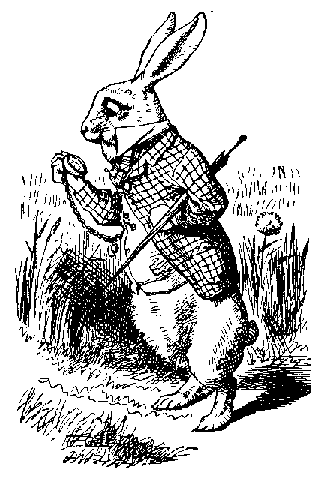
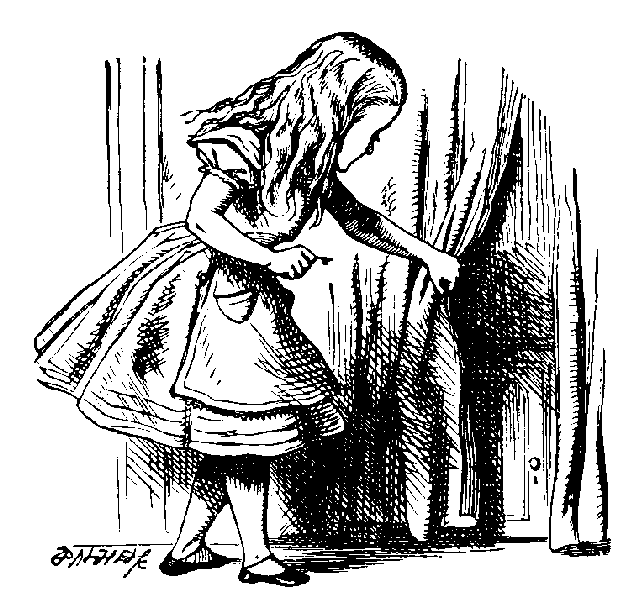
I didn’t want to tell him yet that the essay he’d sent was the entrance to a rabbit hole, and that I had fallen down it.
I hope to have part II out soon, but I’m away from home, visiting my daughter who lives far away. It’ll probably take me a good long minute.
Likes, shares, and comments are welcome. Always appreciate you sharing your own knowledge and experiences in this space.
If you’d like to subscribe:
Rita, you've put into (lovely) words how I experience puzzles, and now I want to get back to the one I've left unfinished at the cottage. Sometimes my eyeglasses get in the way (because they're dirty? Not quite the right prescription?), and I have to peer closely with my glasses on my head, searching for that little spot of colour.
I too have noise, smell, and light sensitivities. Sometimes the light sensitivity clashes with puzzling –– I'll resist, as long as possible, turning the lights up to see the pieces well enough at night. And I smell things no one else seems to notice, it can be quite unpleasant and annoying. The food thing, desk organization system, my dad calling me Spacey Tracey, crowd avoidance, the fingers –– who needs manicures when you can push your own cuticles back? I relate to so much of what you wrote here Rita, and like Emily and Monica, I love the puzzle structure and how you've puzzled pieces, words, and life. xoxo
I’m gonna bring you a Liberty Puzzle—handmade in Colorado. They are so cool.
I love the structure of this. That point where it goes back to puzzles. “This essay will not become a 1,000 piece puzzle, but it could.” I love your writing, Rita.
I have that food thing! Just happened on Tuesday. I so get the, “yeah, but it’s lower case,” thing.
Enjoy your daughter & travels!
Later in the morning, after making the bed:
I was thinking while I was making the bed, "I wonder what puzzle I'd bring to Rita," and then I was thinking about the refusal to capitalize things (trauma v. Trauma, writer v. Writer, artist v. Artist, etc...), and then I thought about accumulations, and then I thought, "microagressions, there's a reason people talk about microagressions, and their impact, because the impact is from accumulations," and of course, so too the impact of capitalism comes from accumulation, in the way that private wealth does, or in the way paychecks do not. In this way, everything that is lower case becomes upper case eventually. If I write enough, for example, I will become a writer whether I call myself a writer or a Writer, and the accumulated words will be proof enough. Which is, in the end, what a puzzle does, or is.